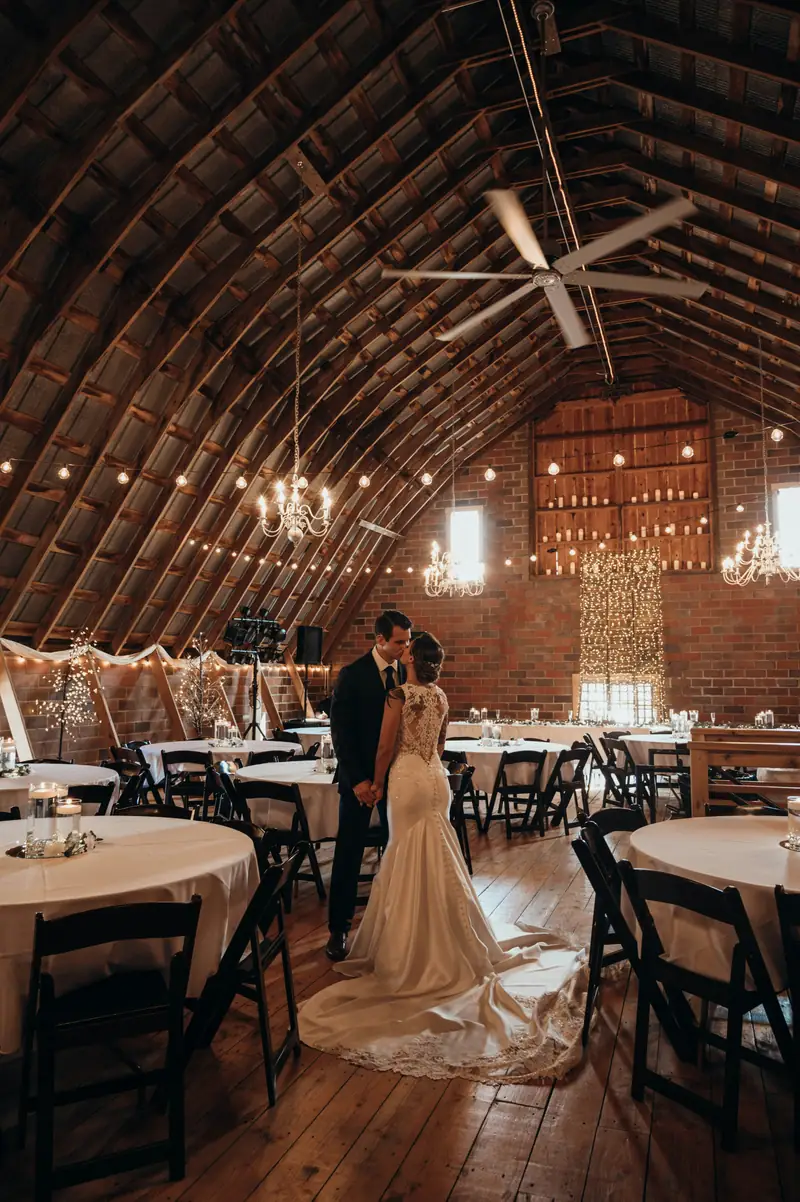
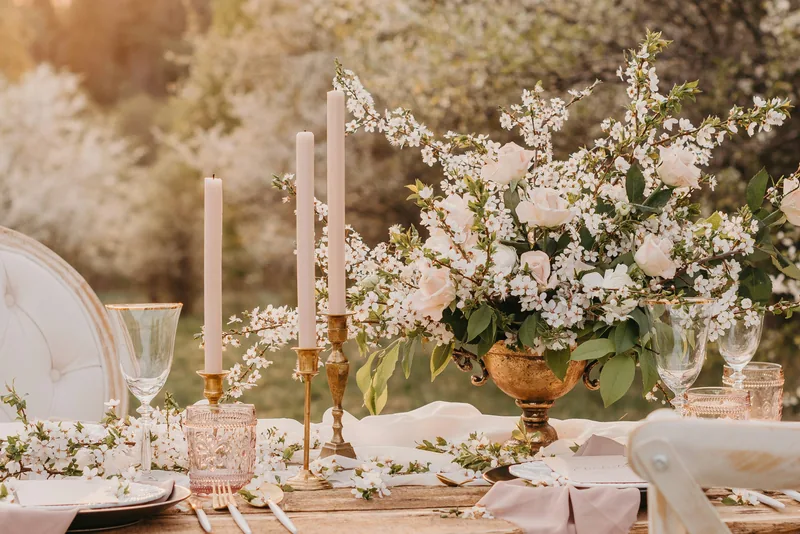
The pitch writes itself and we are not going to write it. Here is the part that decides whether this works for you: at a hall you are buying a package, and up here you are buying a permit and a field.
Raw space means eleven invoices
A full-service venue hands you one contract with one number at the bottom that is wrong by about 40 percent (which we price out here). A barn hands you a rental agreement and a list of things that are your problem now.
Power. A band, a kitchen, a tent, lighting and coolers exceed what a barn's existing service can carry more often than not, and the answer is a generator, which is a rental, a fuel line, a delivery window and a noise source you have to site away from the ceremony.
Water and restrooms. Ask what the fixture count is against 171 guests and get an honest answer. If the answer is a trailer, that is a rental, a level pad, a power draw and a service that has to be scheduled.
Kitchen. Usually none. Your caterer builds one in a tent, and the equipment is on the invoice.
Waste, and who hauls it. Some agreements make you responsible for leaving the site as found, at an hour when nobody wants that job.
Parking and a plan for it after rain. A field that parks 90 cars in August parks considerably fewer in a wet October, and the difference gets solved with steel plate, gravel or a shuttle.
None of that makes a barn a bad idea. It makes a barn a project with a different budget shape, more line items, more vendors, more of the coordination that a hall's banquet manager does invisibly. Price the coordinator in, because the alternative is that the coordinator is you, on the day.
A barn is not a cheap venue. It is an empty one, and empty is a line item eleven invoices long.
Sales tax follows the caterer, not the room
A common assumption about raw-space weddings is that renting a field sidesteps the tax that lands on a banquet bill. Read the state's caterer bulletin before you plan around that: New York treats a caterer's charges, including a good deal of what you would think of as rental, as part of a taxable sale (TB-ST-110, Caterers and Catering Services). Ask your caterer to show you which lines on their proposal are taxable and which are not, and get it before you sign, not with the final invoice.
The tent is the largest thing you will rent
Up here the rain plan is almost always canvas, and canvas is not one line. Frame, sidewalls, flooring, heat, lighting, power, a town permit, and a delivery-and-strike window that can commit the site for a second day at a second day's fee.
Ask for the tent quoted at the size that fits your guest list with the sidewalls down, since that is the configuration you will be using if you need it at all. The full breakdown, including the questions that separate a real tent quote from a placeholder, is here.
Your guests pay for the acreage in miles
This is the honest trade of north county, and the reason we will not simply tell you it is cheaper.
Square footage per dollar goes up as you drive north. So does every cost that lands on somebody who is not you: the hotel block moves further from a Metro-North station, car service for anyone who drinks becomes non-optional rather than sensible, and the last train becomes a thing people ask you about at the bar. Some of your guest list will decline for exactly these reasons, and they will not tell you that is why.
Run the number both ways before you decide you saved money. A hall on the Sound Shore at a higher per-head with everyone twenty minutes from a hotel and a train can be the cheaper wedding once you count what the invitation costs the people receiving it.
What the setting is genuinely worth
Two things, and both are real.
Space. A barn gives you a footprint that most of this county cannot, which means the ceremony, the cocktail hour and the dinner can happen in three different places on the same property rather than in the same room flipped twice while your guests stand in a corridor.
Autumn. The land up here is the county's own scenery rather than a borrowed view, and the peak window is narrow and well documented (I LOVE NY). It is also the most competitive booking window in the state, so if that is the wedding you want, the lead time is longer than you think and the flexibility has to come from somewhere else.
County land, and a note on parkland
Some of what looks like private open space up here is Westchester County parkland, which runs nearly 18,000 acres over more than 50 parks (Westchester County Parks). Parkland has its own permitting, its own hours, and frequently its own concessionaire holding the catering rights. If a site's own material does not make clear who you would be signing with, that is the first thing to establish, and it is not a detail. It decides who can tell your vendors what to do.
How we list barns and farms
Same rules as everywhere: capacity with a dance floor down, the rain plan named as a specific space with a specific capacity, access status, a last-verified date, and no price we have not read off a document. Before you tour: the checklist.